Friday, 8 July 2016

The Innsmouth Tarot, Part 8 - The Suit of Stones


As part of the launch of the Innsmouth Tarot Project, the Miskatonic Folklore Field Study Unit is proud to announce that all of the original source materials will be put on display to the public at a special exhibition held at the Kester Library in Salem, Massachusetts. The exhibition will contain all of the chap-books and common-place books collected in the course of putting together the tarot card set, along with the original cards discovered beneath the Library’s floorboards and the set of cards and other artefacts on loan from the Newburyport Historical Society. A rare viewing of the original Ponape Scriptures will also feature as part of the event.


This exhibition – with accompanying lectures – will take place in mid-August and the Innsmouth Tarot cards will be available for sale in the gift shop. All proceeds from the event will go towards the ongoing restoration work at the Kester Library.

*****

The final suit of the Lesser Arcana is the suit of Stones which represents the physical underpinnings of existence, their manipulation and expression. It equates to the Pentacles, or diamonds, suit of traditional decks and is linked to the Ancient Greek element of earth.

*****

The Ace of Stones


The quintessence of physical power, the Ace stands for worldly capability and material wealth. When it arrives in a reading it is an omen of impending prosperity.

This card heralds the onset of bliss, ecstasy and physical contentment. It signifies attainment and wealth, the presence of gold or treasures and great wealth. In some instances, it foretells the discovery of important antiques, old coins, or a significant rock. When upside-down, it foretells of wealth that brings no pleasure, ill-gotten gains that are a burden, or corruption by money.

The Two of Stones


The hurled rock – emblematic of the sudden blow or the unexpected statement – is the catalyst from which rapid and turbulent change may spring. The thrown stone might be a pebble, or it might be a planet-sized object hurtling from the heavens – either way, when it strikes, nothing will be the same again.

The divinatory meaning of this card is the arrival of troubles, difficult situations arising, or a failure to launch. When inverted, it signifies literary ability or competence in handling difficult matters. It also indicates being forced to feign enjoyment or happiness.

The Three of Stones


The perfectly-cut, flawless gem speaks of great skill and competence. It is an harmonious combination of artistry, science and an accident of nature.

This card speaks of great skill in trade or work; the mastery and skilful deployment of the skills which define one’s daily occupation. It implies perfection as the end results of one’s efforts. When upside-down, it betokens sloppiness, poor-quality work and mediocre results. It also heralds money troubles.

The Four of Stones


A treasure chest might seem like a good way to protect one’s assets, but with it come attendant troubles such as secrecy, rumour and the possibility of forgetfulness. The promise of security is false and simply leads to other woes.


The meaning of this card is an obsession with money matters leading to inequities in one’s life. Miserliness; hoarding; gambling problems: nobody likes a skinflint. When inverted, the card reads as a warning about imminent issues which curtail the gaining of funds: obstacles, delays and suspense.

The Five of Stones


The high fortress wall protects and maintains. Sometimes we grow blind to its nurturing presence, only to realise its necessary purpose in our lives after it falls down.
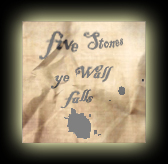

Ruin is the meaning of this card: loss; an error in practise or judgement; the realisation of the importance of something only now that it has gone. It signifies the loss of material wealth or physical protection. When upside-down, it tells of the overcoming of ruin, or the reversal of a bad trend.

The Six of Stones


The gift of a tribute – whether given or received – is a mark of esteem and bestows honour upon both sides of the equation. The tithe is a mark of humility and a realisation of one’s place within a community: in essence, the offering says that one understands one’s place within a greater circumstance.


It’s no surprise, then, that this card tells of charity, or generosity, in one’s future dealings. Inverted, it speaks of the opposite – avarice, greed and miserliness; the inability to give of one’s self in an undertaking.

The Seven of Stones


The holey, or self-bored, stone is a symbol of luck throughout the world, common to many races and cultures, and so it is not unusual to find it as a feature of Deep One folklore. Such stones are rare and are dependent upon fairly peculiar combinations of eroding forces and mineral types – their discovery is always thought to be a good omen.

When found in a reading, the Seven of Stones indicates ingenuity in an undertaking. It talks of growth and success in business and gratifying outcomes stemming from hard work. Upside-down, it betokens anxiety and impatience; rushed decisions and bad calls.

The Eight of Stones


The weathered rock has stood for a long time in the elements and, while some edginess has been pared away, the stone has found its place within the environment and will endure as a result.

This card tells of apprenticeship – a long process of conditioning leading to a fortunate outcome. In many ways it speaks of the power of the individual to progress in their chosen field. When inverted, it reveals vanity, conceit and a lack of ambition through disillusionment.

The Nine of Stones


The carved stone is a hallmark of the artisan’s skill. With such skills, the artist can prosper through his efforts and ensure his material security in the world.


The card embodies the notion of working towards security and safety. It speaks of foresight and forward-planning, prudence, and the ability to make the right judgement when required. Upside-down, it foretells a loss of security, dangers approaching, waste of resources and coming storms.

The Ten of Stones


The seam of gold is a happy discovery and a hallmark of coming prosperity. However, the gold does not simply shake itself from its bedrock: the seam must be worked, and this promise of occupation and productivity is its own reward. It is an assurance of success and a safe future.

When it shows up in a card spread, the seam indicates all of the best aspects of material wealth – safety and security; riches and comfort. When inverted, it signifies risk – a poor use of judgement; a bad tip; and untenable odds.

Yibb-Tstll – The Jack of Stones


Yibb-Tstll, also known as “Chuma” amongst some nomadic Saharan tribes, is the last of the three entities referred-to as the “Drowners”, after Bugg Shash and Nyogtha. As stated previously, it’s not known whether these beings are Great Old Ones in their own right or are perhaps some kind of symbiotic creatures – possibly parasitic – which derive some kind of benefit from association with those entities. Grimoire references, intercessory chants and ritual spells all link them inextricably to the major figures of the Deep One mythology, regardless of their purpose.

Yibb-Tstll is a major figure appearing in a rare work entitled the Cthaat Aquadingen and its related text, the Codex Dagonensis. It is linked to several retaliatory incantations designed to summon a toxic substance called “The Black” which, by inference, would seem to be Yibb-Tstll’s blood, a material considered to have an independent existence from its source. Some sources consider Yibb-Tstll to dwell only in dreams and this notion may hold some currency, considering the dream connections to Great Cthulhu.

When appearing in a card reading, Yibb-Tstll implies a need for study, deep reflection and concentration. This card stands for scholarship and a desire for learning and the new ideas which such effort engenders. The reverse meaning of this card is rebelliousness, the de-valuing of ideas. It stands for unrealistic thinking and the failure to recognise obvious facts. It heralds illogical thinking.

Ghatanothoa – The Knight of Stones


Ghatanathoa – sometimes called “Ghanta” – is the eldest child of Cthulhu spawned upon its first wife, Idh-Yaa. In the ancient – some would say mythical – kingdom of Mu, Ghatanothoa held primacy as the god of the main religion and its temples and priests were the wealthiest and most respected. Legends tells us that Ghatanathoa was brought to Earth by beings from an unknown planet named Yuggoth and installed beneath a mountain named Yaddith-Gho on Mu, from which locale it became an object of veneration. Details of what Ghatanothoa might look like are sketchy; in various texts it is only mentioned that it “is not good to look upon” with the implication that such an act might be deadly.
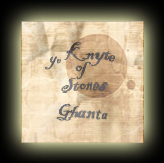

Ghatanothoa in a card reading indicates the presence of a steady and determined individual with the skills and dedication to see a task through to its conclusion. It stands for a methodical presence, imbued with perseverance, having the ability to see a task through to its conclusion. When upside-down, it speaks of limited vision; an adherence to dogma; stagnation and inertia; carelessness in completing tasks.

Idh-Yaa – The Queen of Stones


Idh-Yaa is conceived of as an enormous pale nematode-like creature hailing from a planet orbiting the distant (currently unidentified), double-star, Xoth. With Cthulhu, it produced Ghatanothoa, Zoth-Ommog, Ythogtha and Cthylla, but it is unknown whether it came to Earth with Cthulhu and its offspring, descending from the heavens as “cosmic pus”. References to Idh-Yaa are confined mainly to the Ponape Scriptures and some have interpreted its lack of prominence within Deep One worship as an indication that it is considered less of an entity and more of a generative principle.

When Idh-Yaa shows up in a card reading, it symbolises abundance and wealth, coupled with a sense of majesty and magnificence. It may indicate a highly accomplished moneyed person of great grace and dignity. When inverted, Idh-Yaa heralds a vicious and untrusting person; someone capable of great suspicion and vengeance. It may also betoken false prosperity suspense and a neglect of one’s responsibilities.

Cthulhu – The King of Stones


This avatar of the Great Old One Cthulhu is the one which is most often thought of. We have chosen to depict it as carved from green Chinese jade, as fitting for this suit of cards. The Kester Library set of cards is everything one would expect from this being.


The meaning of this card is loyalty and dependability. It signifies a person of great experience, a successful leader with business acumen, mathematical ability and high intelligence. When turned upside-down, it speaks of vice and corruption; the thought that the end justifies the means. It implies faithlessness.

*****

The Innsmouth Tarot is an inter-disciplinary production of the Miskatonic University, drawing on the talents of the faculty’s best minds in the fields of Anthropology, Folklore, English Literature and History. The team which researched, studied and produced the cards was headed by Dr. Rhonda Wilmarth, PhD.

The Innsmouth Tarot is being issued by The Miskatonic University Press in a single print run, comprising a deluxe version of only 100 copies presented in a gilt-decorated, white calf clamshell box, with a 96-page hardcover book of commentaries, interpretations, and a variety of divinatory spreads with which to practice. All 78 cards are printed on high quality, high-slip stock, edged in gilt. This deluxe version costs $150.

The standard version of The Innsmouth Tarot comprises 78 high-slip, gilt edged cards in a decorated cardboard mailer, including a pamphlet of card meanings and divinatory card spreads. The standard version of The Innsmouth Tarot costs $49.95.


The cards each display a unique ‘manta ray’ design on the verso.

Purchases can be made by contacting The Miskatonic University Press online and quoting your credit card number. Shipping charges are extra.

The Innsmouth Tarot – ISBN 0-85030-1718


The Innsmouth Tarot, Deluxe Version – ISBN 0-59527-3335

Sunday, 3 July 2016

My Top 10 Vampire Movies...


I tend to take a dim view of vampire films. For the most part, they seem to me to be simply an excuse for various production companies to dress down a bunch of good-looking (semi-) thespians and splash blood all over them. Vampire stories are, for the most part, thinly-veiled morality tales about lust and whether or not to cave into lustful inclinations, so they tend to be made into movies directed at the 18-35 year old cinema crowd. “Don’t give into your cravings!” they seem to cry, “or some stern authority figure will come along and give you what for!”; but probably not a stake through the heart…

Big budget takes on Bram Stoker’s novel Dracula have come and gone and few have done anything innovative with the source material. Bela Lugosi dressed up as Fantomas for his 1932 turn, but the film is about as lacklustre as it gets: many scenes are of the ‘talking heads’ variety and about as interesting to watch as a Punch & Judy show on mogadon (they made a Spanish version at the same time, using the same sets and costumes but shooting at night with a different cast – it’s much better). Todd Browning’s best work still remains “Freaks”; he was just phoning this in. The 1992 “Bram Stoker’s Dracula” by Francis Ford Coppola was a by-the-numbers re-telling aimed at those who don’t read and need to catch up: apart from Gary Oldman’s impersonation of the Count, it’s a weird exercise in wardrobe and set design but little else.

The Hammer studios released a bunch of vampire films in the ‘60s-‘70s but they tend to rely more on titillation than scares. Christopher Lee grunts and roars along in most of them but it’s more about the boobs than the blood. “Dracula: Prince of Darkness” (1966) is the best of these, but the sequels don’t repay watching. “Count Yorga: Vampire Hunter” and “Countess Dracula” are of interest but again, they’re not exactly high art.

Every now and then, however, along comes a vampire flick that does something different, that takes the concept and explores it in unexpected ways. I’m always pleasantly surprised when I discover one of these and they make up the bulk of what I’m going to call my “Top 10 Vampire Films (for now)”. These are in chronological order, so please don’t think I’m ranking them in terms of merit!

F.W. Murnau: “Nosferatu - eine Symphonie des Grauens” (1922)


An oldie and a goodie. Murnau has been tagged with all kinds of occult misbehaviour due to the set design in this (and other) of his films, even to the point of having been dug up from his grave in Germany to have his skull stolen. This is what happens when you play up your ‘dark side’ in order to boost movie sales. Stoker’s widow hounded Murnau mercilessly over this film, attempting to destroy every print due to copyright infraction. This meant that it passed from view in Europe for awhile before prints that had been sent to the US came to light and re-issues could be generated.

The moodiness and creepy aura of this film cannot be underestimated. Add to this the fact that “Count Orlock” looks more like Stoker’s vampire than any that came later has got to be a bonus. For the simple reason that there were no Hollywood clichés to fall in line with, this movie opens new ground by virtue of just having been made.

Murnau’s other movies partake of the same moody chalice and, even when they aren’t about things supernatural, they repay investigation: “Sunrise” is brilliant, as is his “Faust”. If you’re keen, take a look at “Shadow of the Vampire” (2009) which stars Willem Dafoe as Max Schreck from “Nosferatu”, if the vampire had really been a vampire – it’s a nice piece of post-modernist deconstruction that pays warm homage to the source material. The remake of the film starring Klaus Kinski is for completists only: apart from being in colour, it doesn’t improve on the original and there are some ‘Punch & Judy moments' between Renfield and Orlock that are quite wince-worthy.

Carl Theodor Dreyer: “Vampyr” (1932)


Moody and mysterious this is a quality example of the surrealist’s art. Faced with having to make his movie in three different languages, Dreyer kept the dialogue at a minimum and resorted to the outdated use of intertext titles to push his drama along. The story revolves around a young man who stops in a village inn and is gifted with a volume of vampire-hunting lore. His efforts to expose and thwart the vampire preying on the townsfolk see him almost buried alive, and we see him being carried to his grave in a coffin with a convenient window in the lid, enabling us to watch every second of his mounting horror. There is extensive use of montage photography here allowing us to observe characters’ shadows behaving strangely and the ghostly forms of increasingly off-kiltre characters to emerge. The film’s reception was quite poor upon its release; a later release in France did little better. Nowadays, the movie has resounding critical acclaim and it’s easy to see why.

Jean Rollin: “The Iron Rose” (1973)


Moving on, we skip ahead to the ‘70s, vaulting over a slew of vampire flicks which did little more than build a brick wall of cliché that later directors were forced to contend with. With this film, I’m being a little cheeky, because it’s doubtful that it even counts as a vampire film, but it’s a great movie nonetheless.

The film follows the night-time wanderings of a young French couple as they break into a graveyard for the night, as part of their tryst. Getting in is the easy part; getting back out proves to be entirely more problematic. Having encountered each other at a funeral for a mutual acquaintance, the pair are fairly ambivalent about each other – he thinks that he’s God’s gift to women; she’s at a loose end and wanting to see what will happen, if only to break her existential despair. They become lost; they hole up in a tomb; some tentative sexual fumblings occur and he oversteps the line. Next thing he’s hurt and in danger of dying; she locks him in the tomb and tries to find her way out of the cemetery.

Many peculiar and unexpected images litter this film, including the appearance of a clown paying a visit to a dead friend’s grave (clowns have dead friends too). The mood is uneasy and strange and unexpectedly sexy in places. The spell ends with the sunrise and the girl escapes to the beach revelling in having survived the night. This may not be a vampire film, but its obsession with death and sex, along with the mystical entrapment within the boneyard, certainly allow the viewer to read it that way.

Kathryn Bigelow: “Near Dark” (1987)


I’m a Kathryn Bigelow fan from way back – this film and “Blue Steel” are two of the best thrillers going, for my money, although they work from two very different premises. “Aliens” fans enjoy the fact that some of the more colourful actors from that film show up in this one, and Bigelow certainly lets them run wild and chew up the scenery; none of it is to the detriment of the film, however. Upon its release in the US, a print of this film was commissioned by the Museum of Modern Art in New York to be catalogued amongst their collection of essential American cinema works, so you have to ask yourself – why did it take so long for Kathryn Bigelow to get her Oscar? There’s far too many years between this flick and 2008’s “The Hurt Locker”.

Out on the town with his country friends, Caleb spots May (Jenny Wright) and escorts her out to the middle of nowhere in his truck. Just as dawn is nearing, he asks May for a kiss and she bites him on the neck, before running away across the fields. Caleb walks home and begins to burn as the sun rises. He gets abducted by May’s friends before he completely immolates and they add him to their motley collection of miscreants.

It’s interesting to note that not once is the word “vampire” used in this story, although it’s entirely obvious that that is what they are. The scene in the remote bar where they chew through all the staff and patrons (except for one) is graphic and designed to play mercilessly on your nerves. When the last victim escapes by breaking through a back window, you’re actually relieved, not so much for his sake but for the fact that the sequence is finally over. Tension is Bigelow’s forte and she winds it up to fever pitch here.

The rest of the movie resolves itself satisfyingly and a particular feature that I like is the increasing ambivalence in Caleb and May’s relationship. The film got overrun by “The Lost Boys” which appeared at the same time and buried it in the background; however, if you like your vampires vicious and bloodthirsty, this is the film to watch.

Phillip Ridley: “The Reflecting Skin” (1990)


Again, technically, this is not a vampire film. However, it is a story about Seth Dove, a young boy in the American mid-West, who thinks that his beloved older brother is being seduced by one, even though that’s not at all what she is. What she is, is a whole lot more scary than that…

Set just after the Second World War, this remote and desolate township, lost among vast golden wheatfields, is home to many messed-up, post trauma men, trying to find their way back home to a place that stayed still while they fundamentally changed. Dolphin’s husband kills himself a week after their marriage, leaving her bereft and traumatised; Luke – the young protagonist’s father – kills himself when his other son is found murdered and the blame points his way; Cameron, Seth’s older brother just returned from the War, dying of radiation poisoning and guilt-ridden over his part in the atomic weapons program, finds solace in Dolphin’s arms, causing Seth to come to his aid.

This is a truly tragic film of the first water. If films like “Paperhouse” or “Let’s Kill Uncle” – movies where children completely misunderstand what the adults are up to – are your meat and drink, you will love this edgy and terrible (in the good sense) film.

Guillermo del Toro: “Cronos” (1993)


Again, not a vampire film. You can see a picture emerging here.

This was one of the first Guillermo del Toro films I ever saw and it made me a fan for life. It involves the owner of an antique shop in Mexico, who finds a strange clockwork device inside a plaster statue of an angel. He encounters a bunch of heavy gangster types who ask him if he’s seen the object, but he denies having found it, thinking, like any antique dealer, that he needs to check into it more fully before offering it for sale. The device turns out to contain the secret of immortality, injecting its operator with alchemical fluids; there is a drawback though: the newly-immortal user must imbibe fresh blood to stay alive. Our antiquarian fails to conceal his newly-energised self from the villains – who all work for a dying and eminently shady multi-millionaire – and his life gets turned upside-down.

This is the best of del Toro’s two vampire flicks (the other one is “Blade 2” – don’t go and see it. Don’t.) Once you’ve seen this film, you’ll recognise from where del Toro gets his fascination for angel statues in plastic bags and for clockwork insects. Not only is it tense and scary – the scene where the old man wakes up just before being cremated is especially good – but there’s also room for pathos as the old man and his grand-daughter come to terms with his new state of being. It’s less hard to find nowadays, thanks to the Academy Award for “Pan’s Labyrinth”, so find a copy and get ready for bloody fun.

David Slade: “30 Days of Night” (2007)


I have no time for vampires who look like rock stars, or movies that celebrate the sexy vampire ideal. I want leeches, not vamps. For this reason, I eschewed most of the Hammer horror line-up along with “Interview with the Vampire” (1994) and (although it pains me to say it) Jim Jarmusch’s “Only Lovers Left Alive” (2013) which is simply an awfully tedious inside joke, padded out with a lot of name-dropping. No, I want vampires that are completely out there, and who look as though they’ve just dug themselves up for a night of bloody debauch.

Just so, are the bloodsuckers in Slade’s re-telling of the ground-breaking Dark Horse graphic novel. In this film, a shipload of vampires arrive in Barrow, Alaska, just as the town is about to lock itself down for a month of darkness as the earth tips its hat away from the Sun. The vampires’ human ally creeps into town to kill dogs, break helicopters and destroy all the satellite ‘phones and, just when Sheriff Eben works out that trouble is afoot, it’s night-time and the vampires start to run amok.

These are festy buggers. Their faces are covered in blood and they bounce and run about like they’re on wires. The most creepy thing about them is the fact that their eyes are smaller than normal, giving them a rat-like aspect. They’re also just a little bit to the left of what passes as human – as you would be if you’d become a vampire. They’re bestial and remorseless and their sheer brutality will give you pause. They also lie through their pointy teeth, as their nasty little helper learns to his cost.

For my money, this is what vampires would look like if they were real – not suave cape-wearing aristos with an excess of world-weariness. They made a sequel to this film, into which they tried to inject some sexy overtones (read: boobs). I’d advise against it.

Tomas Alfredson: “Let the Right One In” (2008)


Making bad sequels which undermine the original is bad enough; but when they re-make a movie from a perfectly decent foreign-language original, that’s just money wasted. This film (and the book it was based on) broke box-office records when it came out, so of course Hollywood chose to give it a makeover into English and into an American setting. Avoid it, that’s all I have to say.

The focus of this story is the question of what happens to a vampire when their devoted human helper starts to approach its use-by date. In this tale, a lonely little boy becomes embroiled in the life of the little girl who moves into the flat next door, a little girl who walks barefoot in the snow and who lives with an aging older man who takes orders from her. They become friends and she saves him from some particularly evil school bullies. The fallout from her bloodsucking nocturnal activities soon mounts up and her keeper sacrifices himself to prevent her exposure. Our little boy steps up to take his place.

I may seem to have overstated things here, causing some to cry “spoiler alert!”, but the path of this narrative is not what makes it so special. The nuances are what’s important here and while the little girl is quite inhuman, our hero brings out her humanity and it makes for an engaging and ultimately satisfying spectacle.

Now: on to 2014!

Ana Lily Amipour: “A Girl Walks Home Alone at Night” (2014)


There must have been something in the water this year, because a whole slew of vampire films appeared and there was virtually not a bad one among them. The first of these is undoubtedly my favourite. As you start to watch it, you’d find yourself hard-pressed to decide whether or not this movie is taking the piss; it will delight you to learn that it’s doing both.

The eponymous girl spends her days in her basement flat listening to 80s records. At night she emerges wearing her hijab and wanders about the town seeking whatever comes her way. Early on, she encounters a colourful pimp who takes her back to his place to induct her into his stable of whores. Imagine his surprise when she shows her fangs and bites off his thumb!

Eventually she meets a young man with some heavy problems: his uncle has been partaking of the heroin with which he has been supplied, rather than selling it as ordered. Our young man tries to resolve things and the gangsters abscond with his new car as part-payment on his uncle’s debt. Into his life, scooting along on a purloined skateboard with her headgear billowing like Count Dracula’s cape, comes the girl, and the rest – as they say – is magic.

The image of the vampire, like any monster character in film or literature, has often been interpreted as a symbol of the outsider, the one who doesn’t belong and who finds it difficult to fit in. In this instance, the vampire does extra work: this time she’s a woman, and, just as the vampire stands outside of human society, so woman stands outside the patriarchy. There are no glass ceilings holding our vampire back! Amipour began filming this in her homeland of Iran, but decided that the story didn’t make sense there. So she re-located her farsi-speaking cast to the US and set the story in a desert-encompassed boondocks town. The day that Hollywood makes an English-speaking version of this will be a black one indeed, so get out there and find it while you can!

Justin Benson & Aaron Moorhead: “Spring” (2014)


Another piece of strange fruit that emerged in 2014 was this delight, which frankly defies description. It’s the tale of a young man who loses his mother to cancer (compare and contrast her death scene to the mother’s death in “Guardians of the Galaxy” – it will blow your mind!) and goes into a tailspin, losing his job and flirting outrageously with danger. He decides to travel and heads off to Italy where he starts a road trip with a pair of British yobbos that seems destined to continue his run off the rails. Then he washes up in a small seaside town outside of Naples and meets the girl.

At that point he bites off more than he can comfortably choke down. She puts him through the emotional wringer and, each time he thinks he’s got her worked out, she moves the goal posts and he’s back to square one. Let it not be said however, that this is a film all about the guy chasing some fleeting mirage of a fantasy woman: she may be fantastic, but her concerns – everyday and emotional – are realistic (after a fashion) and bring as much weight to bear upon the relationship as his destructive, “poor me!” catharsis. This is, in fact, a love story and love is at the heart of the problem, and both partners in the relationship stand to lose a great deal in the outcome (and not just their lives).

I was a third of the way into this film before the supernatural cat was let out of the bag. As it was, I was engrossed with the travails and travels of our hero and had no issue with watching right through to the end; however, seeing our heroine half-transformed into some octopoid monstrosity really sold me. Ideally, you should do as I did – take the disc, sit on it for months until you find there’s nothing else to put on your DVD player and have your socks knocked off in the second act. If you don’t get hooked, then just chill and watch all of the innovative camerawork which was done using drones mounted with tiny cameras – gobstopping!

*****

That’s my Top 10. There are others I could have added – most noticeably Jemaine Clement and Taika Waititi’s “What We Do in the Shadows”, another gem from 2014 – but I think this reveals my quintessential list. You’ll notice that other classics like “The Hunger” and Polanski’s “Fearless Vampire Killers” are absent – to be absolutely frank, I haven’t seen either of them so, until that happens, they’ll be MIA. I have also stayed away from television shows like “Penny Dreadful” (great!), “The Strain” (meh!) and “Ultraviolet” (excellent!), but if I ever put together a list of vampire TV shows, you’ll know where to look.

Wednesday, 29 June 2016

The Innsmouth Tarot, Part 7 - The Major Arcana 4


The Ponape Scriptures

The original copy of this work was discovered in the Carolinas by Captain Abner Exekiel Hoag in 1734. It was scribbled upon a series of dried palm leaves protected by a frame made from the wood of an extinct cycad. With the help of his servant Yogash, Hoag translated the text: some say that Hoag wrote the material himself after talking to the natives; as the original is written in hieratic Naacal, a language which should not have been available either to Hoag or his servant, this point of view is somewhat ameliorated (if only by the existence of the actual text).


Hoag’s attempts to publish the work, which seemed designed for missionary purposes, were thwarted by the religious leaders of the time who were especially concerned by references to Dagon throughout the text. In 1795, it was finally published in a duodecimo format (above), after Hoag’s death by his granddaughter, Beverly Hoag Adams, although prior to this several clandestine manuscript copies had been passed amongst occult circles. The first printed (or “Beverly”) edition is slightly abridged and error-ridden due to cost constraints in its production. The original work is still available for view however, in the Kester Library in Salem Massachusetts, USA. The most voluble proponent for the work was Harold Hadley Copeland who cited the book extensively in his essay “The Prehistoric Pacific in Light of the Ponape Scriptures” (1911) and who published his own translation through the Miskatonic University Press in 1907.

The book deals largely with the lost continent of Mu and the wizard-priest Zanthu who doomed the place in a fiery cataclysm; it discusses Cthulhu, Idh-yaa and their descendants including Ghatanothoa, Ythogtha, Zoth Ommog and (obliquely) to Cthylla. The text has dramatically affected and informed the rites and practices of the Esoteric Order of Dagon, among others.

*****

Card 17 – Cthylla

“In his daughter’s darkling womb
Great Cthulhu will be born
And at his birth the Fabric of
Space and Time will be torn
When he casts away Death’s shroud...”

Much of the legendry associated with the Great Old One Cthulhu makes reference to its kin – its “wives” offspring and other relatives, including a being known as “Zhotha-qquah”. In the Deep One system of worship, the children of Cthulhu - Ghatanothoa, Zoth-Ommog and Ythogtha - are given special veneration, but there is another child whose existence is generally kept entirely secret:

Cthulhu’s daughter, Cthylla, is mentioned rarely in any texts of Deep One lore; there are passing references in a few chap-books (as we have seen) and the Ponape Scriptures invest only a handful of lines of text. Another source is the Necronomicon, but even this mention is veiled and obscure. Where Cthylla’s name does occur in the source material, it is always delivered in the form of a prophecy and, as anyone familiar with the works of Nostradamus is aware, the sense of these passages is typically obtuse and nebulous.

This oracular material seems to foretell a time when Cthulhu is beset by enemies and seemingly destroyed; however, it is fated to be re-born from “his daughter’s darkling womb” and to re-emerge to conquer the planet. This destruction/resurrection scenario is not unusual in well-defined myth-cycles of this type and is not unexpected in Deep One lore. The secrecy surrounding Cthylla, in that it represents the key to Cthulhu’s unexpected re-emergence and subsequent victory, is therefore explained.

Adding to this mystery, no source cards are extant in either the Kester Set of cards or that from Newburyport. This suggests that the card was always removed from the deck and carried separately by the diviner, only being re-incorporated during readings, thus reducing the possibility of an outsider discovering a reference to this entity.

The divinatory meaning of this card is hope and faith. It speaks of promising opportunities, bright futures and favourable prospects. Its appearance in a card spread is always considered a good omen. It may also signal inspiration, insight and satisfaction.

Inverted: When inverted, it betokens bad luck, misfortune, hopes dashed, or a period of contentment soon terminated.

Card 18 – Ghroth


“When ... the time for reawakening is near, the universe itself shall send forth the Harbinger and Maker, Ghroth. Who shall urge the stars and worlds to rightness. Who shall raise the sleeping masters from their burrows and drowned tombs; who shall raise the tombs themselves. Who shall be attentive to those worlds where worshippers presume themselves stewards. Who shall bring those worlds under sway, until all acknowledge their presumption, and bow down.”
-The Revelations of Glaaki

The figure of Ghroth emerges rarely in the literature of the Deep Ones and invariably as a harbinger, or psychopomp. Ghroth’s purpose is to signal the Great Old Ones of the time when the “stars are right” and to travel to each one of them, awakening them to the purpose ahead. In this sense, Ghroth is very much the signifier of the End Times.

Just how this being fits in to the scheme of Cthulhu and its associates is unknown. Some texts state that it is connected in some way to an entity named “Azag-Thoth” while others posit a connection to a distant planet called “Shaggai”. Like Cthulhu and its kin, it is said to impact negatively upon certain sensitive minds and its approach to Earth is claimed to cause widespread distress, anxiety and panic. The Newburyport card set contains a card for this being with an atypical pictorial component.


In a card spread, Ghroth signifies dangers and obstacles of an unexpected nature; unforeseen perils and problems and unknown enemies. Along with this it indicates deceit, trickery and double-dealing; an insincere relationship or false friends. It represents lies, scandal and immorality.

Inverted: When presented upside-down, Ghroth symbolises minor deceits – ‘white lies’ – or trifling mistakes. It can signify the overcoming of temptation or the period of uneasy contentment received after having paid a heavy price for one’s actions.

Card 19 – Y’ha-nthlei


“Whether the dreams and the fancies of Yoharneth-Lahai be false and the Things that are done in the Day be real, or the Things that are done in the Day be false and the dreams and fancies of Yoharnath-Lahai be true, none knoweth saving only MANA-YOOD-SUSHAI, who hath not spoken.”

-Lord Dunsany, 1905

Y’ha-nthlei is an underwater city prevalent in the mythology of the Deep Ones. In much of the lore, this place is where the Deep Ones congregate after their final transformation and where they will spend the rest of their immortal lives. In many ways, it equates to the Christian notion of “heaven” and must, in this regard, be considered a fictional locale – an afterlife habitation not a physical place.

Many commentators have posited the location of Y’ha-nthlei as being “beyond Devil Reef”, and certainly the destructive actions of Government agencies in 1928 seemed to follow up this notion. However, it is unlikely that an entire submarine society – with potentially thousands of citizens and constructions - could be located so close to the American eastern seaboard without having been detected long before now.


Like many similar religions, Y’ha-nthlei is simply a ‘reward’ for a life of faithful devotion to the tenets of Deep One belief; a reason for adherence to the community and its strictures.

This card represents satisfaction, attainment, contentment. It signifies material wealth, good friends and a comfortable existence. It can betoken a favourable marriage.

Inverted: When inverted, this card reveals unhappiness and discontent; it can symbolise plans come to naught or the breaking of an engagement. A clouded future awaits the questioner, but perhaps victory is merely delayed rather than completely destroyed.

Card 20 – The Stars are Right!


“That is not dead which can eternal lie,
And with strange aeons, even death may die.”

-Abdul Alhazred

The name of this card refers to a cosmic event which, according to Deep One lore, will signal the coming of the end times. Such a feature of this complex mythology is certainly not unusual: the Vikings had their Ragnarok, Hinduism foretells the Kali-Yurga, and even Christianity details the end of creation in the Book of Revelations in the Bible. In fact, given the complexity of the Deep One myth cycle, it would be decidedly unusual if an end-times scenario did not appear.


Little is known of what would occur when the “stars are right”; however certain features appear throughout the source material as indicators. As we have seen, the appearance of Ghroth in the heavens is the first sign. It is this entity which will cause the Great Old Ones to revive from their interminable slumber and allow them to burst loose from their imprisonment. Foremost of these, from the Deep Ones’ point of view, is Cthulhu which will emerge from its sunken tomb in the corpse-city of R’lyeh, but other such beings are also prophesied to emerge. Some texts also refer to a twin set of entities called Nug and Yeb, whose job is to clear the Earth of all life by means of their “torch and furnace”; however details are sketchy.

This card indicates rejuvenation and regeneration; it speaks of a change of position, either physically, as in a relocation, or in terms of one’s occupation or role, signalling a material promotion. In all ways, this card foretells development or progress.

Inverted: When displayed upside-down, this card signals a delay, or postponement. It tells of a failure to act or a failure to face facts. It betokens indecision suspension or disillusionment.

Card 21 – The Uncaring Void


“And that inverted bowl we call the sky,
Whereunder crawling coop’t we live and die:
Raise not thy hands to it, for it
Rolls impotently on as thou or I.”

-Omar Khayyam

The last card in the Major Arcana brings us full-circle back to our point of origin. Once more we face a vast emptiness from which anything may emerge, although this time the void is the endlessness of space rather than a submarine dark. The initiate’s progress has passed through all aspects and conditions of earthly existence only to discover that there is a further eternity of learning in the next phase, and possibly even more beyond that - an unending cycle of initiation and mastery.


The Newburyport Set of cards is noteworthy for its lack of pictorial content; however, in this instance the creator has wittily used their standard medium of pen and ink to imbue extra meaning to the card – rather than words, the creator has been content to signify the card with a large blob of ink. This creative approach to the design has thus informed the design of our version of the card in the Innsmouth Tarot.

This card signifies attainment and completion. It speaks of ultimate change and perfection. It indicates success and the admiration of others. It is the final goal to which all the other cards have led.

Inverted: Upside-down, the card tells of imperfection, of the act of quitting when only half done. It reveals an inability to follow through and a profound lack of vision.


To Be Concluded...