Tuesday, 19 July 2016

Review "Ghostbusters" 2016


FEIG, Paul, “Ghostbusters”, Columbia Tristar Pictures, 2016.


I went to see the first Ghostbusters movie in Geneva, which is how I ended up seeing Disney’s “The Black Cauldron”. The session of “Ghostbusters” that we were angling towards – a “VO” or “version originale” session in the original language – had been dumped in favour of the German language print and so we went to the cinema next door to see Uncle Walt’s latest offering instead. If they’d been playing the French dubbed version I would have stuck it out, but my German was pretty woeful so it would have been money wasted. Still, we were back the next night and the VO session was all systems go: it turned out that it was worth waiting for.

As a result, I had high hopes for this re-boot and was looking forward to a good time. Unlike many other fan-boys out there, it bothered me not at all that the new cast was an all-girl affair; my main concern was that the movie stuck to its rationale and dished up the laughs with the scares in equal serves. Sadly, it was not to be.

Comedy, it seems, has taken a sharp turn into a place that I don’t understand. Movies like “Bridesmaids” and “The Hangover” are based on topics which I find deeply un-funny, and the technique behind them seems to be based largely on improvisational theatre, where a scene is set up and then allowed to lurch its un-scripted way forwards until it collapses to the floor like a spent balloon before moving on. This is okay if you enjoy watching nervy and neurotic people wittering on in a vaguely embarrassed and awkward fashion before running out of steam, but I do not count myself amongst that crowd. Noel Coward-esque it ain’t.

The movie therefore is a series of these un-scripted stagings, each getting set up and then being allowed to completely fizzle out, exhausted of all its potentiality. Kristen Wiig visits her old friend, angry that she has published a book that they both agreed to never let see the light of day; as she bursts into Melissa McCarthy’s laboratory, McCarthy appears wearing a stupid-looking electronic helmet. They bat this around until it dies a death and a scripted exit allows them to finally leave it alone. Cut to the next set up; rinse and repeat. Frankly, it’s dull. It’s one thing to trust that your comedians will find the comedy gold in the situation, but – as a paying customer – I’m here to see that gold, not the mining process.

The flailing around for the funny also has a detrimental effect on the characters. While on the lookout for the right moment, the actors aren’t really inhabiting their roles, and their portrayals suffer from a lack of commitment. Of the four leads, only Kate McKinnon was convincingly wearing her character’s skin; the rest were just wearing funny clothes.


Still, I guess if you enjoy this kind of humour, then you may like this film. Certainly there were no problems with the special effects: the ghosts were very well executed and quite alarming in places – although that irritating “Slimer” ghost was back again, taking up way too much screen time than its presence warranted. These films are also known for their music, and again, this was very enjoyable - I boogied along quite happily in my cinema seat. The only other problem was the cameos.

To my mind, a re-boot should be just that: dust it off and do it again. Put your own mark on it; make it fresh and get it out there once more. Take the core of those original ideas and move the concept onto to another, more startling, place. There is a strong sense in this movie of paying debts to the past and frankly, it could have done without them. As the movie rolls along, all of the original cast members from the first film show up: Bill Murray is an antagonistic parapsychologist; Annie Potts is a hotel receptionist; Ernie Hudson runs a funeral service business; Sigourney Weaver is McKinnon’s character’s mentor. Even the StayPuft Marshmallow man is back. Of these, the only one that is amusing is Dan Ackroyd as a grumpy New York cabbie who “ain’t afraid o’ no ghosts”. Waiting for each of these guys to do their bit and get it over with is just painful; at least Rick Moranis had the good taste to be excused.

I don’t get what all this sacred cow nonsense is about. If Paul Feig wanted to do a Ghostbusters film then why the hell didn’t he just go and do it? The script; the cast; the story – it was all bogged down with other people’s trash and a heavy notion of ‘paying their dues’ to be allowed to play in this sandpit. Basically, they just shot themselves in the foot. And not only that – the post-credit sequence, which sets the new Ghostbusters up for a sequel, references mayhem from the demonic entity Xul, who – as we all remember – was the evil being from the 1984 film. Come on! Do something new already!

J.J. Abrams is the current ‘re-boot queen’ at the moment, reanimating everything that he can get his hands on. His first Star Trek movie managed to involve Leonard Nimoy in a cameo as Spock without bogging-down the proceedings; it was new and fresh. His next ‘Trek offering was less successful, being simply “Wrath of Khan” turned inside out. Even his turn at the helm of “Star Wars” – while better than anything George Lucas could ever do – was still peppered with a wealth of nostalgic dead weight that wasted opportunities for doing something ground-breaking. Is this what we have to live with now? Warm fuzzy feelings brought on by repetitious re-introductions of old elements of franchise films? Do we somehow fool ourselves that, just because we spotted an in-joke when a former mainstay actor pops up, that we are somehow more clever than we suspected? It’s a pretty hollow victory. Maybe such re-introductions are there to comfort us in the face of a brutally uncertain world? If so, who decided that we need such soothing? It’s an opiate people; designed to keep us focussed on the Kardashians and their vapid ilk.

In the final analysis, there’s really nothing new to see here. Maybe in the sequel they’ll feel that they own the property enough to do something with it, but I suspect not. Buy the soundtrack instead.

Two tentacled horrors.

Postscript: Can I just say that I was REALLY disappointed that this didn't work? After months of idiot geeks (who should know better) railing about how "only men can be Ghostbusters", the only people that let this vehicle down were the writers and the director. What we have here is a failure to commit. This franchise is its own genre and either you get it or you don't. The end credits for this film are a sad list of those who didn't.

Friday, 15 July 2016

My Top 10 Werewolf Films...

In looking at making a list of werewolf films that appeal to me, I discovered that they are few and far between. Of the standard monster tropes out there, the werewolf is indeed the poor cousin to vampires, re-animated horrors, and spectral bad-guys. The main approach that Hollywood takes with this creature nowadays is to posit it as a symbol of adolescent maturation, the change brought on by puberty and all of its scary and bewildering ramifications. Thus we have a slew of ‘teenaged werewolves’ movies and TV shows which, by-and-large, are fairly poor-quality, inordinately focussed upon sex, and usually comedic.

A problem with werewolves is that they only appear at certain times, ie. whenever it’s a full moon, which makes them rather predictable. This is especially so when it comes to television series based upon them. Conveniently, there’s always a full moon out when things go down on TV, whether it’s “Buffy the Vampire Slayer”, “Being Human”, “True Blood”, or “Teen Wolf”. This can often get in the way of an audience’s ability to suspend disbelief. Fortunately, everyone seems to agree that silver is bad for werewolves, unlike vampire shows where nobody can seem to make up their minds about how best to get rid of them.

The type of werewolf film which appeals to me are the ones which take as their raison d’etre the notion of the ‘beast within’, moving beyond the simple appearance of secondary sex characteristics and into the realm of uncontainable rage and bestial impulses. Here, things get far more interesting (and way less funny). Given my preference, the list of movies narrows down even more, and, in order to make this exercise worthwhile, I’ve had to move beyond the merely lupine and embrace a wider scope of material which encompasses people turning into all sorts of other creatures. Hopefully, I’ll be able to string this out to a list of ten!

Again, the list is completely chronological, not a ranking by quality.

Waggner, George (1941), “The Wolf-Man”


This is the seminal Universal Horror film that really kickstarted the whole werewolf movie genre. Lon Chaney Jr. arrives at the ancestral British seat of his family, bringing his brash but adorable American ways to a quaint English village. He settles in and begins to woo the daughter of the local antiques dealer. Things are going swimmingly until the gypsies come to town and, after a romantic evening at the gypsy fair, our American hero is bitten by a ‘wolf-like creature’ while defending his potential new girlfriend from its ministrations. Of course we all know what comes next...

Lon Chaney had big shoes to fill, what with his father being the infamous “man of a thousand faces”, and he doesn’t disappoint here in his transformation. As a human being his distress is palpable and the audience is immediately drawn to his plight. On the flipside, Bela Lugosi plays the first werewolf who bites Chaney and is killed by him (with a silver-headed walking stick): this is Dracula ‘phoning it in. Lugosi was alternately good and bad in roles, but this is a stinker; fortunately, he’s not in it for long. They didn’t even bother to give his character a different name!

The plot is twisty and unnerving, leaving the viewer on their seat’s edge until the final, tragic, scene. On top of it all, there’s a nice piece of doggerel which gets drummed into your consciousness and which will stay with you forever:

“Even a man who is pure in heart
And says his prayers by night,
Will become a wolf when the wolfsbane blooms
And the Autumn moon is bright.”

Tourneur, Jacques (1942), “Cat People”


Producer Val Lewton and Director Jacques Tourneur were brilliant when it came to making scary movies. They never had a lot to work with, in terms of script, plot, scenery, actors, or special effects, and yet they always came up with the goods. On one occasion, Lewton was thrown a copy of Jane Eyre and told to “do something with this, but call it ‘I Walked With A Zombie’”; even with those crippling limitations he made an excellent film.

Cat People is a text-book example of the sort of magic these two could work together. The premise is crazy – man impulsively marries an Eastern European woman he barely knows, only to regret his decision when it turns out that she’s from a village of people cursed to turn into panthers after dark – and yet, Tourneur and Lewton make it work. In fact, it worked so well that RKO Pictures, the company for which they toiled, was pulled out of an economic nose-dive and back into the black.

The trick they used was to let the imaginations of the audience do all of the heavy lifting. While there is a panther in this film, it’s in a cage at the zoo and doesn’t really cause much mayhem (a little, not a lot). For the rest of the film, we are fed only the suggestion of a stalking night-time menace - shadows and low rumbling growls - and yet the presence of the werecat is palpable. Especially great is the scene at the swimming pool where the cat bails up the hero’s new girlfriend.

The sequel to this masterpiece is, typically, not as satisfying, but it has its moments; Nastassia Kinski was in a re-make of this flick in 1982: ignore it, and go for the real deal.

Cocteau, Jean (1946), “La Belle et la BĂȘte (Beauty and the Beast)”


The classic Perrault tale brought to life by a visionary film-maker. There is a problem about filming this story that always makes it a tricky proposition: at the end of the tale, just when we’ve learned to love the Beast, he turns into some ordinary-looking guy who doesn’t quite live up to the fantasy version of ‘the hero behind the mask’ which we’ve built up in our imaginations. Nevertheless, Belle falls into his arms and everyone lives happily ever after. Very unsatisfying. Cocteau realised this problem early on and deals with it in an effective, interesting and – no doubt – cost-saving manner: Belle’s evil suitor, sworn to kill the Beast, swaps bodies with the creature, thus ensuring that the attractive physical form and the beautiful personality are locked together (and also that hero, villain and creature are all played by the one actor). Belle herself comments upon the transformation that it might take some getting used to. Interestingly, while the body swap doesn’t happen in the Disney version, a similar sentiment is expressed by Belle in that film.

Aside from this issue, the rest of Cocteau’s film is a sumptuous and, in places, scary movie. The Beast’s castle is dreamlike and eerie with statues that come to life and arm-shaped torch holders that move as the guests do. At all times the surreal fairy-tale quality of the story is maintained. The Beast himself is played as if reining himself in from his most bestial impulses, which restraint and adoration are always effectively conveyed, despite layers of makeup. There is a hair-trigger atmosphere about this film that makes it feel like a house of cards, ready to come down at any minute, and it makes watching and re-watching it very worthwhile.

Majewski, Janusz (1970), “Lokis – A Manuscript of Professor Wittembach”


An excellent piece of crazy straight out of Eastern Europe. This time, there are no canines or felines; things take more of an ursine turn and werebears are our monster du jour. Again, most of the horror is implied and the whole story turns on an ‘is he, or isn’t he?’ premise; however, there is a large cast of backwoods characters who do things to each other (and to animals) which will shock you along the way. This is high concept and very clever movie-making with a moodiness and dreaminess that sometimes borders on the Hammer horror, but not enough to break its spell.

I wrote an extended review of this film a couple of years ago; check it out for a fuller overview as to why you should watch it.

Landis, John (1981), “An American Werewolf in London”


When this movie first came out it was widely touted as the next big thing in movie special effects. It was also noteworthy for being part of the new ‘horror-is-funny’ movement that was catching on at the time. No longer could a horror movie be made with serious intent; if there wasn’t a heaping side-order of humour to go with it, the studios wouldn’t even touch it.

What this film has going for it is high production values. The humour nestles within the horror, not displacing or leavening any of the drama, but – like the gate-keeper in “Macbeth” - serving as a release valve for the audience, so that they can de-pressurise before the next onslaught. As the movie theatre slowly fills up with the werewolf’s wisecracking victims and they slowly start to decay around him, we gain a psychological insight into the character, along with the horror that only rotting corpses failing to lie down can offer. The transformation scenes – so quintessential to modern werewolf fare – are excruciating and it’s a relief when they’re over.

This movie rests securely on its debt to the previous Lon Chaney Jr. vehicle, following in the footprints left by that earlier film. There is no happy ending here but there are a lot of laughs and screams before the bitter end.

Jordan, Neil (1984), “The Company of Wolves”


With this movie, we’re back in metaphorical territory. This film is based on a short story from Angela Carter’s collection The Bloody Chamber, a feminist re-working of many fairy-tale tropes. In this tale we encounter Little Red Riding-Hood, but an R-rated version in which the blood flows and keeps on flowing.

There are a number of werewolves in this film and they each transform in unique and interesting ways, primary amongst these is the one featured on all the posters and promotional material, where the wolf emerges from the mouth of its human counterpart. It’s as if the director threw down the gauntlet to his production crew, challenging them to innovate and to keep on innovating until he called time on the whole exercise.

The film is a portmanteau of several stories narrated by characters within the initial set-up: we drift from narrative to narrative, taking the lessons to be learned and moving back to our central players. The focus here is once more on the nature of the change from child to adult, but not in the sophomoric “I Was A Teen-Age Werewolf” sense. Here the purpose is to discuss gender stereotypes and we learn that, while the men in this fairy-tale often turn out to be monsters, the women change also and they can more than meet that challenge.

Gans, Christophe (2001), “Le Pacte des Loups (Brotherhood of the Wolf)”


France, probably more than any other country, is the home and source of werewolf legendry. During the Middle Ages and into the Enlightenment, the place ran red from supposed werewolf activity and there are many court records of people being burnt at the stake for being shapeshifters, alongside all of the witches that were being rounded up as well. You’d expect there to be some kind of filmic capitalisation on this source material, but there isn’t much. This film goes a long way towards rectifying that.

This movie kicks off as a moody period piece; however, in short order, the director tears a page out of Luc Besson’s playbook and it morphs into a full-on action adventure. It’s chop-socky meets 18th Century Europe: fists and feet (and tomahawks) fly, guns roar and swords flash; there’s damsels in distress, suavely evil Counts to bring to justice...oh, and werewolves!

The story revolves around the always-prepared GrĂ©goire de Fronsac, sent by the King of France to get to the bottom of all the rumours about werewolves running amok in the province of Gevaudan. With his Native American manservant, Mani, they ride into town and mayhem ensues. There’s something for everyone with this film – it’s a guaranteed crowd pleaser.

Marshall, Neil (2002), “Dog Soldiers”


A bunch of British SAS troopers head out into the forest for some wilderness survival training. An accident happens, they re-group, a stranger appears and an altercation takes place. Next thing, the soldiers are being taken out one-by-one by something familiar with their training and weapons, and those that don’t die seem to switch sides...

It says something about the impact of a movie when a throwaway line uttered by a second-string character becomes lodged in the pop-cultural consciousness to such a degree that an entire film can be generated using that scrap of dialogue as the punchline. That movie was “The Matrix”; the line was “there is no spoon”; and the film it spawned was this one. Many people hate this movie because it’s seemingly predicated upon this one joking reference; however, I think that they’re missing the irony: isn’t a werewolf flick supposed to be a shaggy-dog story?

With the exception of this one aspect, this movie has a lot going for it. The excitement and tension are visceral; the acting is good; and the transformations are superb. The characters are rounded, they make choices based on their desperate situations, and the narrative flows believably from these choices. Okay, they might be clones of roles from “Aliens” or “Predator” but, for what this film’s trying to do, they work. After all that, for anyone who still objects to the presence of this movie in my list, I have two words for you: “The Howling”.

Isaac, James (2006), “Skinwalkers”


I have an aversion to horror movie franchises and for some reason the werewolf movie seems to lend itself to an endless parade of sequels. It seems as though it’s not enough to make a bad lycanthrope film and quietly walk away from it; no, it’s like there’s an unwritten law that you have to keep hammering away at it in a pathetic attempt to improve upon the concept. Thus we have endless “Underworld” movies, an array of “Ginger Snaps” flicks and the above mentioned slew of “Howling” films that reached a definite nadir with “Howling III – the Marsupials”. It’s reached a stage where my eyes glaze over if there’s even a possibility of a werewolf in a horror film, but fortunately I wasn’t too jaded to catch this one.

What makes this film tick is that it’s about two sets of werewolves – a “good” clan who have settled into town and keep their affliction under wraps, and a travelling pack of “bad” werewolves, who enjoy killing and carnage. The baddies roar into town looking for the youngest member of the good-guys’ pack, because a prophecy has foretold that the kid will seriously affect the way that lycanthrope destiny will unfold in the future (specifically by stopping all the mindless slaughter somehow). Our bad guys are too keen to keep on keeping on, so they decide that the kid must go.

Our two teams collide in the town’s centre and things get wild. There are extended chases, epic fights and gore galore. Both teams are riddled with secrets and unresolved issues and these begin to surface, pushing the action along to a satisfying conclusion. An extra point in this movie’s favour is that it lists Elias Koteas among its actors and – given his penchant for quirky and offbeat productions - this always bodes well, as films such as “Fallen”, “The Prophecy” and even “Teenage Mutant Ninja Turtles” (not the recent drek – the very, very first one) would indicate. And so far, no-one’s made a sequel...

Bazalgette, Edward (2009), “Werewolves: The Dark Survivors”


This is a mockumentary which was made by the Animal Planet people as a kind of a joke. It seems kind of weird that they would have gone along with this concept, but nevertheless, it’s out there and it works. Like any documentary tracing the origins and lives of a particular species of creature, it traces the history of the werewolf across the ages, positing reasons as to how the lycanthrope came to be and then watching the animals in their normal environment. It’s a bit like David Attenborough meets Michael Moore.

We meet a clan of rootless werewolves, travelling across the country and trying to keep a low profile whilst keeping body and soul together. As we learn more about them, we observe issues of dominance within the pack structure, tearaway youngsters bridling under the command of the Alpha Couple. We watch as they enter town, stock up on supplies and try to earn some cash. Then someone makes a bad mistake...

This film is not for everyone. Certainly, if you check the online reviews, it gets quite a drubbing from folks who watched it thinking they were going to see the standard werewolf fare. Personally though, I quite enjoyed it, but then I am the kind of geek who likes it when others make an attempt at combining reality with fiction. In fact, there are quite a few people out there in the world who think that this documentary is real... It’s free to view on YouTube if you’re interested.

*****


Well, that wasn’t so bad: I managed to make it to ten films after all. It’s interesting that the were-creature movie trope doesn’t have greater representation than it does, at least in the realm of serious film-making. I guess it’s easier to make movies about serial killers, because then the makeup budget accounts for only a fraction of the cost. Sadly, it seems that the lycanthropes are just there to morph, howl, rip faces off, and wait for someone to invent a silver bullet slash dagger and end the rampage. Surely, after years of “Werewolf: the Apocalypse” being played by gamers worldwide, someone could come up with a better script than the usual B-grade dross?


Rip It & Run: Tarot Cards & Roleplaying


Having laboured through the production of a complete deck of Deep One themed tarot cards, I thought it would be of benefit to discuss how these sorts of cards can be useful when running an ongoing roleplaying campaign, especially a “Call of Cthulhu” one.

A major problem that most Keepers have when conducting a session is that things will happen on the spur of the moment for which no preparation has been made. A random NPC – a small child; a postman; a reception clerk – will attract the attention of one of your players and, the next thing you know, they have acquired a sudden and exaggerated importance in the tale which you’re unfolding. On the fly, you have to flesh them out with myriad minor details appropriate to a figure of greater narrative importance, much of which you never intended. This is all part of the fact that plans never survive contact with the enemy (ie, your players) and you can never anticipate what will suddenly attract their attention.

A Keeper in whose game I used to play would meet these situations in a novel and interesting way. When he realised that a mere cipher was now in the spotlight, he would shuffle his tarot deck, draw three cards at random and place them in a row on the tabletop: the central card informed him of the NPCs current disposition; the card to the left told him what circumstances the character had just emerged from, and the right-hand card expressed the NPC’s hopes, goals and aspirations. With a good knowledge of the card interpretations, it meant that he could flesh out the character effectively and also see how the character fitted – or could be fitted - into the ongoing plot. This was especially useful since we mostly played the Steve Jackson game “In Nomine”, a game in which every character, player or otherwise, needs to have a fully-formed interiority that we angels and demons could read.

The three-card method is useful when the character needs a bit of depth, but just drawing one card can be enough to kickstart a character concept, depending on the type of game that you’re playing.

Using this method can add extra spice to a session where little of interest is happening or if the Keeper is just feeling ornery. Are the players buying train tickets? Flip some cards to see if the ticket seller is having a bad day or not. Did one of your players treat a bellhop with casual rudeness? Check the cards to see if he swallows his pride and takes the guests’ bags to their room... or not. When a game is rolling along smoothly towards its logical conclusion and your team seems a little too comfortable with it all, this is a good way to randomly throw a spanner into their cosy little worldview...

*****

Some of you who might have been following the last few tarot card posts will have noticed that they’ve been presented in the form of a set-up for a “Call of Cthulhu” adventure. Along with the cards themselves, there is a bunch of background material outlining the consequences of a naive academic dabbling in things better left alone. If you have players who romp around Arkham and its neighbourhood, you could take the background for this material and turn it into a search for the missing professor and the miscreants who have abducted her.

First of all, statistics would need to be generated, for the Professor, her staff, the interns and the other University personnel. Then there’s the team at the art therapy studio and the print-shop, and the local members of the emergency services. If your taste runs more to the “Delta Green” side of things, shadowy members of Homeland Security and the FBI could have your players getting paranoid in no time. Finally of course, there are the presumed cultists and other Innsmouth denizens to flesh out. Various splat-books and other supplements (Chaosium or otherwise) are out there from which most of this type of information can be pillaged.

As to what’s happening, you can take the situation in a number of directions: is Rhonda Wilmarth actually an unwilling abductee? Are the Innsmouth folk responsible after all? Is this a Government conspiracy to justify another attack upon Devil Reef? Given the simple premise, your story could go in any number of interesting directions...


Friday, 8 July 2016

The Innsmouth Tarot, Part 8 - The Suit of Stones


As part of the launch of the Innsmouth Tarot Project, the Miskatonic Folklore Field Study Unit is proud to announce that all of the original source materials will be put on display to the public at a special exhibition held at the Kester Library in Salem, Massachusetts. The exhibition will contain all of the chap-books and common-place books collected in the course of putting together the tarot card set, along with the original cards discovered beneath the Library’s floorboards and the set of cards and other artefacts on loan from the Newburyport Historical Society. A rare viewing of the original Ponape Scriptures will also feature as part of the event.


This exhibition – with accompanying lectures – will take place in mid-August and the Innsmouth Tarot cards will be available for sale in the gift shop. All proceeds from the event will go towards the ongoing restoration work at the Kester Library.

*****

The final suit of the Lesser Arcana is the suit of Stones which represents the physical underpinnings of existence, their manipulation and expression. It equates to the Pentacles, or diamonds, suit of traditional decks and is linked to the Ancient Greek element of earth.

*****

The Ace of Stones


The quintessence of physical power, the Ace stands for worldly capability and material wealth. When it arrives in a reading it is an omen of impending prosperity.

This card heralds the onset of bliss, ecstasy and physical contentment. It signifies attainment and wealth, the presence of gold or treasures and great wealth. In some instances, it foretells the discovery of important antiques, old coins, or a significant rock. When upside-down, it foretells of wealth that brings no pleasure, ill-gotten gains that are a burden, or corruption by money.

The Two of Stones


The hurled rock – emblematic of the sudden blow or the unexpected statement – is the catalyst from which rapid and turbulent change may spring. The thrown stone might be a pebble, or it might be a planet-sized object hurtling from the heavens – either way, when it strikes, nothing will be the same again.

The divinatory meaning of this card is the arrival of troubles, difficult situations arising, or a failure to launch. When inverted, it signifies literary ability or competence in handling difficult matters. It also indicates being forced to feign enjoyment or happiness.

The Three of Stones


The perfectly-cut, flawless gem speaks of great skill and competence. It is an harmonious combination of artistry, science and an accident of nature.

This card speaks of great skill in trade or work; the mastery and skilful deployment of the skills which define one’s daily occupation. It implies perfection as the end results of one’s efforts. When upside-down, it betokens sloppiness, poor-quality work and mediocre results. It also heralds money troubles.

The Four of Stones


A treasure chest might seem like a good way to protect one’s assets, but with it come attendant troubles such as secrecy, rumour and the possibility of forgetfulness. The promise of security is false and simply leads to other woes.


The meaning of this card is an obsession with money matters leading to inequities in one’s life. Miserliness; hoarding; gambling problems: nobody likes a skinflint. When inverted, the card reads as a warning about imminent issues which curtail the gaining of funds: obstacles, delays and suspense.

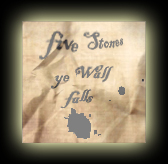
The Five of Stones


The high fortress wall protects and maintains. Sometimes we grow blind to its nurturing presence, only to realise its necessary purpose in our lives after it falls down.


Ruin is the meaning of this card: loss; an error in practise or judgement; the realisation of the importance of something only now that it has gone. It signifies the loss of material wealth or physical protection. When upside-down, it tells of the overcoming of ruin, or the reversal of a bad trend.

The Six of Stones


The gift of a tribute – whether given or received – is a mark of esteem and bestows honour upon both sides of the equation. The tithe is a mark of humility and a realisation of one’s place within a community: in essence, the offering says that one understands one’s place within a greater circumstance.


It’s no surprise, then, that this card tells of charity, or generosity, in one’s future dealings. Inverted, it speaks of the opposite – avarice, greed and miserliness; the inability to give of one’s self in an undertaking.

The Seven of Stones


The holey, or self-bored, stone is a symbol of luck throughout the world, common to many races and cultures, and so it is not unusual to find it as a feature of Deep One folklore. Such stones are rare and are dependent upon fairly peculiar combinations of eroding forces and mineral types – their discovery is always thought to be a good omen.

When found in a reading, the Seven of Stones indicates ingenuity in an undertaking. It talks of growth and success in business and gratifying outcomes stemming from hard work. Upside-down, it betokens anxiety and impatience; rushed decisions and bad calls.

The Eight of Stones


The weathered rock has stood for a long time in the elements and, while some edginess has been pared away, the stone has found its place within the environment and will endure as a result.

This card tells of apprenticeship – a long process of conditioning leading to a fortunate outcome. In many ways it speaks of the power of the individual to progress in their chosen field. When inverted, it reveals vanity, conceit and a lack of ambition through disillusionment.

The Nine of Stones


The carved stone is a hallmark of the artisan’s skill. With such skills, the artist can prosper through his efforts and ensure his material security in the world.


The card embodies the notion of working towards security and safety. It speaks of foresight and forward-planning, prudence, and the ability to make the right judgement when required. Upside-down, it foretells a loss of security, dangers approaching, waste of resources and coming storms.

The Ten of Stones


The seam of gold is a happy discovery and a hallmark of coming prosperity. However, the gold does not simply shake itself from its bedrock: the seam must be worked, and this promise of occupation and productivity is its own reward. It is an assurance of success and a safe future.

When it shows up in a card spread, the seam indicates all of the best aspects of material wealth – safety and security; riches and comfort. When inverted, it signifies risk – a poor use of judgement; a bad tip; and untenable odds.

Yibb-Tstll – The Jack of Stones


Yibb-Tstll, also known as “Chuma” amongst some nomadic Saharan tribes, is the last of the three entities referred-to as the “Drowners”, after Bugg Shash and Nyogtha. As stated previously, it’s not known whether these beings are Great Old Ones in their own right or are perhaps some kind of symbiotic creatures – possibly parasitic – which derive some kind of benefit from association with those entities. Grimoire references, intercessory chants and ritual spells all link them inextricably to the major figures of the Deep One mythology, regardless of their purpose.

Yibb-Tstll is a major figure appearing in a rare work entitled the Cthaat Aquadingen and its related text, the Codex Dagonensis. It is linked to several retaliatory incantations designed to summon a toxic substance called “The Black” which, by inference, would seem to be Yibb-Tstll’s blood, a material considered to have an independent existence from its source. Some sources consider Yibb-Tstll to dwell only in dreams and this notion may hold some currency, considering the dream connections to Great Cthulhu.

When appearing in a card reading, Yibb-Tstll implies a need for study, deep reflection and concentration. This card stands for scholarship and a desire for learning and the new ideas which such effort engenders. The reverse meaning of this card is rebelliousness, the de-valuing of ideas. It stands for unrealistic thinking and the failure to recognise obvious facts. It heralds illogical thinking.

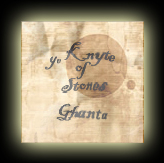
Ghatanothoa – The Knight of Stones


Ghatanathoa – sometimes called “Ghanta” – is the eldest child of Cthulhu spawned upon its first wife, Idh-Yaa. In the ancient – some would say mythical – kingdom of Mu, Ghatanothoa held primacy as the god of the main religion and its temples and priests were the wealthiest and most respected. Legends tells us that Ghatanathoa was brought to Earth by beings from an unknown planet named Yuggoth and installed beneath a mountain named Yaddith-Gho on Mu, from which locale it became an object of veneration. Details of what Ghatanothoa might look like are sketchy; in various texts it is only mentioned that it “is not good to look upon” with the implication that such an act might be deadly.


Ghatanothoa in a card reading indicates the presence of a steady and determined individual with the skills and dedication to see a task through to its conclusion. It stands for a methodical presence, imbued with perseverance, having the ability to see a task through to its conclusion. When upside-down, it speaks of limited vision; an adherence to dogma; stagnation and inertia; carelessness in completing tasks.

Idh-Yaa – The Queen of Stones


Idh-Yaa is conceived of as an enormous pale nematode-like creature hailing from a planet orbiting the distant (currently unidentified), double-star, Xoth. With Cthulhu, it produced Ghatanothoa, Zoth-Ommog, Ythogtha and Cthylla, but it is unknown whether it came to Earth with Cthulhu and its offspring, descending from the heavens as “cosmic pus”. References to Idh-Yaa are confined mainly to the Ponape Scriptures and some have interpreted its lack of prominence within Deep One worship as an indication that it is considered less of an entity and more of a generative principle.

When Idh-Yaa shows up in a card reading, it symbolises abundance and wealth, coupled with a sense of majesty and magnificence. It may indicate a highly accomplished moneyed person of great grace and dignity. When inverted, Idh-Yaa heralds a vicious and untrusting person; someone capable of great suspicion and vengeance. It may also betoken false prosperity suspense and a neglect of one’s responsibilities.

Cthulhu – The King of Stones


This avatar of the Great Old One Cthulhu is the one which is most often thought of. We have chosen to depict it as carved from green Chinese jade, as fitting for this suit of cards. The Kester Library set of cards is everything one would expect from this being.


The meaning of this card is loyalty and dependability. It signifies a person of great experience, a successful leader with business acumen, mathematical ability and high intelligence. When turned upside-down, it speaks of vice and corruption; the thought that the end justifies the means. It implies faithlessness.

*****

The Innsmouth Tarot is an inter-disciplinary production of the Miskatonic University, drawing on the talents of the faculty’s best minds in the fields of Anthropology, Folklore, English Literature and History. The team which researched, studied and produced the cards was headed by Dr. Rhonda Wilmarth, PhD.

The Innsmouth Tarot is being issued by The Miskatonic University Press in a single print run, comprising a deluxe version of only 100 copies presented in a gilt-decorated, white calf clamshell box, with a 96-page hardcover book of commentaries, interpretations, and a variety of divinatory spreads with which to practice. All 78 cards are printed on high quality, high-slip stock, edged in gilt. This deluxe version costs $150.

The standard version of The Innsmouth Tarot comprises 78 high-slip, gilt edged cards in a decorated cardboard mailer, including a pamphlet of card meanings and divinatory card spreads. The standard version of The Innsmouth Tarot costs $49.95.


The cards each display a unique ‘manta ray’ design on the verso.

Purchases can be made by contacting The Miskatonic University Press online and quoting your credit card number. Shipping charges are extra.

The Innsmouth Tarot – ISBN 0-85030-1718


The Innsmouth Tarot, Deluxe Version – ISBN 0-59527-3335